
Black Cat Level 2 Pattern Overview
The Overall Puzzle Structure
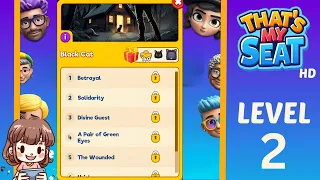
At the start of Black Cat Level 2, players are presented with a familiar scene: a backyard setting with a central cabin. The area is littered with various objects and footprints, hinting at a narrative or a puzzle to be solved by identifying specific elements. The primary goal seems to be to piece together a story or sequence of events, indicated by the character dialogue presented below the scene. The game mechanics appear to involve matching or interacting with specific items within the environment, likely related to the progression of the story or the completion of tasks. The layout challenges the player to systematically identify and interact with elements that are crucial to solving the mystery or advancing the narrative.
The Key Elements at a Glance
- Characters: Players will see several character portraits at the bottom of the screen, indicating who is involved in the current scene or dialogue. These characters are the focal point of the narrative.
- Footprints: Numerous footprints are scattered across the backyard. These are likely clues, indicating movement or actions taken by characters within the scene. The type and placement of these footprints will be key to solving the puzzle.
- Objects: Various objects are present in the backyard, such as a car, a doghouse, trees, a grill, and a swing. Some of these objects might be interactive or relevant to the story progression.
- Dialogue Boxes: The dialogue boxes provide the narrative context for the level. Players need to read these to understand the events and clues. Specific character names or actions highlighted in the dialogue are important.
- "That's My Seat" Logo: This branding element is consistently visible, reinforcing the game's identity.
- Episode Progression: The screen shows "Episode 2" of the "Black Cat" chapter, indicating the player is progressing through a story-driven game.
Step-by-Step Solution for Black Cat Level 2
Opening: The Best First Move
The optimal first move in this level is to identify and select the dialogue box mentioning "Costa was on the roof for maintenance and repair work." This is confirmed by the checkmark appearing next to it, indicating it's the correct story element to focus on first. This move is crucial because it directly relates to the visual scene: Costa is depicted on the roof of the barn, and the narrative confirms his action. This establishes a clear starting point for understanding the scene's context.
Mid-Game: How the Puzzle Opens Up
After selecting the "Costa on the roof" clue, the next logical step is to find the dialogue that logically follows this observation within the narrative. The video shows the player selecting the dialogue box that states, "The gray one was a Scottish Straight. He was male too. That's why his name was Wallace... Yes, the name comes from that famous character we learned about in that historical movie." This choice aligns with the visual of the cat named Wallace being near the area where Costa was working. This sequence of connecting character actions and descriptions to visual elements is key to progressing. The footprints in the yard also become more relevant as players try to deduce the sequence of events based on character movements.
End-Game: Final Cleanup and Completion
The final steps involve carefully reviewing the remaining dialogue options and matching them with the characters and their positions. The gameplay demonstrates the player selecting the dialogue related to "Muner" and "Mikos" and their interactions, followed by confirming the statements about "Snowy" and "Ulrich." Each correct selection triggers a visual confirmation, and the footprints are also actively used to deduce the correct sequence. The final selection is the one that completes the narrative arc for this particular episode, leading to the "WELL DONE!" screen. The process relies on cross-referencing the text with the character placements and the overall context of the scene.
Why Black Cat Level 2 Feels So Tricky
Misinterpreting the Footprints
Players might initially overlook the significance of the footprints, assuming they are mere decorative elements of the scene. However, the solution often hinges on understanding the narrative by observing which characters are associated with specific sets of footprints. For instance, the footprints leading to and from the roof might directly correlate with Costa's presence there, as mentioned in the dialogue. The trick is to realize that the footprints are not just random but are visual cues directly tied to the story's progression.
Overlooking Character Placement
Another common pitfall is not paying close enough attention to where each character is located within the scene. The dialogue often describes characters performing actions in specific areas. If a player selects a dialogue option that doesn't match the character's depicted location, they might be led astray. For example, if the text mentions someone being near the swing, but the character is shown by the grill, that dialogue option might be a red herring or a later part of the sequence. The solution requires systematically matching the dialogue to the character's position on the board.
The Subtle Clues in Dialogue
The text itself can be tricky, as it often contains multiple pieces of information, some more critical than others. Players might get bogged down in the narrative details rather than focusing on the specific actions or locations mentioned that directly relate to the puzzle's objective. For instance, the level might present descriptive dialogue about a character's personality, but the key to progression is the part of the dialogue that mentions where they were or what they were doing. The solution lies in identifying these actionable clues within the broader narrative.
The Interconnectedness of Clues
Perhaps the trickiest aspect is realizing how all the elements – character positions, footprints, and dialogue snippets – are interconnected. It’s not just about finding one correct piece of dialogue; it’s about weaving them together to form a coherent sequence. A player might correctly identify one clue but then struggle to find the next logical step because they haven't fully grasped how that first clue fits into the larger picture. The strategy is to view each correctly identified dialogue box as a piece of a larger puzzle that unlocks the next set of interactions.
The Logic Behind This Black Cat Level 2 Solution
From the Biggest Clue to the Smallest Detail
The core logic of this level revolves around a process of elimination and contextualization. It starts by identifying the most prominent or easily verifiable clue, such as a character clearly performing an action described in the dialogue (like Costa on the roof). Once this anchor point is established, players work outward, using that confirmed information to deduce the significance of other clues. The footprints become more meaningful when viewed in relation to known character locations and actions. For example, if the dialogue says "Mikos was near the doghouse," and there are footprints leading from the doghouse to another area, this helps in sequencing subsequent events. The solution progresses by matching narrative elements to their visual representations and logical flow within the scene, gradually filling in the story.
The Reusable Rule for Similar Levels
The strategy used in Black Cat Level 2 is a widely applicable puzzle-solving pattern for this game. The fundamental rule is to prioritize dialogue options that directly correspond to observable actions or positions of characters within the game scene. Start with the most visually obvious or narrative-explicit clues. Once an anchor point is confirmed, use it to interpret the meaning of other elements, such as footprints or less explicit dialogue. The process involves building a chain of linked information, where each correct step confirms the next. Always look for the dialogue that best explains the current visual state of the game. This systematic approach of matching text to visuals, starting with the clearest connections, is the key to efficiently clearing these types of story-driven puzzle levels.
FAQ
What is the first step to solve Black Cat Level 2?
The first step is to identify and select the dialogue option that states, "Costa was on the roof for maintenance and repair work." This is visually confirmed by Costa's position on the roof in the game scene.
How do I understand the role of footprints in this level?
The footprints act as visual clues that correspond to character movements mentioned in the dialogue. By matching the dialogue's description of where characters were or what they were doing with the locations of footprints, players can determine the correct sequence of events.
What if I select the wrong dialogue option?
If you select an incorrect dialogue option, the game will not provide a visual confirmation, and you will need to backtrack and try a different option. The correct choices are those that directly align with the characters' positions and actions described in the narrative, building a coherent story.