
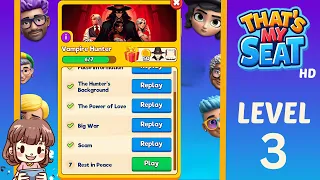
Vampire Hunter Level 3 Pattern Overview
The Overall Puzzle Structure
At the start of Vampire Hunter Level 3, the player is presented with a top-down view of a saloon. The objective appears to be related to characters interacting and progressing through a narrative. The board layout features several characters positioned around a central bar area, with various interactable objects such as drinks, food, and chairs. The primary mechanics involve observing character dialogues, their current states (e.g., in thought, drinking), and the overall environment to deduce the correct sequence of actions or dialogue choices. This level fundamentally tests the player's ability to interpret subtle visual cues and character interactions to advance the story.
The Key Elements at a Glance
- Characters: The saloon is populated by multiple characters, each with distinct portraits and dialogue boxes. Key characters include the vampire hunter, various patrons, and potentially antagonists. Their emotional states and interactions are crucial.
- Dialogue Boxes: These are the primary source of information and narrative progression. They present dialogue and often offer choices or descriptions of character thoughts.
- Bar and Booths: The central bar and surrounding booths are the main interaction zones. Characters are often seated here or interact with the bar itself.
- Objects: Scattered throughout the saloon are objects like drinks, food items, and chairs. These may be interactable or serve as environmental storytelling elements.
- Footprints and Guns: In the upper section of the scene, there are footprints and drawn guns, indicating potential conflict or a chase sequence.
Step-by-Step Solution for Vampire Hunter Level 3
Opening: The Best First Move
The most effective opening move in Vampire Hunter Level 3 is to observe the dialogue and character reactions. The video highlights that the key is to pay attention to who is interacting with whom and what their current emotional state is. Specifically, selecting the correct dialogue option or interaction that leads to a specific character's reaction or movement is paramount. For instance, clicking on the correct dialogue for Danika when she is interacting with the Sheriff is a critical early step that simplifies the rest of the level by correctly triggering the narrative progression. This ensures the player is following the intended story path.
Mid-Game: How the Puzzle Opens Up
As the game progresses, the focus shifts to managing multiple character interactions. The video shows that after the initial dialogue choices, new characters become available for interaction, and the narrative branches. The key is to continue observing the dialogue for clues about character relationships and intentions. For example, the interactions between Styx and Skul, or Enyo and Nisha, need to be processed correctly. The puzzle opens up as you unlock new dialogue options based on previous choices, guiding the player through the unfolding story of the vampire hunters and their investigation. The critical part is to correctly match the dialogue prompts to the character's current emotional or situational context, which is often indicated by subtle animations or dialogue cues.
End-Game: Final Cleanup and Completion
The final stages of Vampire Hunter Level 3 involve tying up loose ends and ensuring all characters have had their necessary interactions. The video demonstrates that once the critical dialogues and character movements are triggered, the focus becomes on the final narrative resolution. This often involves a chain reaction of events leading to a "Well Done!" screen. The tricky part here can be ensuring that all characters have been "activated" correctly through the dialogue choices. Missing a key interaction might prevent the level from concluding or lead to an incorrect outcome. The visual cues of characters moving to specific positions and performing actions, like Echo and Briar clinking drinks, are important to note. The final sequence typically involves a series of successful interactions leading to the completion screen, signifying that the story objective has been met.
Why Vampire Hunter Level 3 Feels So Tricky
Misinterpreting Character Motivations
Players might misread the motivations of the characters because the dialogue is presented in snippets and can be ambiguous. For example, the interactions between the various hunters and the saloon patrons might seem straightforward, but subtle nuances in their speech or expressions could indicate underlying tensions or hidden agendas. The visual detail that solves this is carefully observing the character portraits for expressions of fear, suspicion, or camaraderie, as well as the specific wording used in the dialogue boxes. A common mistake is to assume a character's intentions are purely what's stated, when in fact, their actions or prior dialogues might suggest otherwise. To avoid this, players should always consider the broader context of the character's involvement in the vampire hunt and look for any visual cues that contradict their spoken words.
Overlooking Environmental Clues
The environment of the saloon itself can provide crucial clues that are easily overlooked. For instance, the presence of guns and footprints in the upper area hints at a past or impending conflict. Players might focus solely on the dialogue and miss these important visual elements that inform the narrative and potential solutions. The solution lies in recognizing that the scene is more than just a backdrop for dialogue; it's an active part of the story. A common mistake is to ignore these environmental details, assuming they are purely decorative. To avoid this, players should always take a moment to scan the entire screen, noting any unusual objects or arrangements that might relate to the ongoing vampire hunt.
The Complexity of Dialogue Choices
The sheer volume of dialogue options and the seemingly small differences between them can be overwhelming. It's easy to pick a choice that seems logical based on the immediate conversation but leads to a narrative dead-end or an incorrect character interaction later. The key visual detail here is understanding the flow of the narrative and how each dialogue choice influences character reactions and subsequent dialogue availability. Players often fall into the trap of thinking there's only one "right" answer for each line, when in reality, it's about selecting the choice that best fits the unfolding story and character arcs. To avoid this, it's helpful to think about the overall goal of the vampire hunters and how each dialogue choice contributes to or detracts from that goal.
The Logic Behind This Vampire Hunter Level 3 Solution
From the Biggest Clue to the Smallest Detail
The core logic of Vampire Hunter Level 3, like many narrative-driven puzzle games, revolves around a process of deduction based on progressively revealed information. At the highest level, the "biggest clue" is the overall premise of the Vampire Hunter story – the characters are actively hunting vampires. This overarching goal dictates many of the interactions and dialogue options. From there, players need to identify the most immediate or impactful clues: the current dialogue, the characters involved, and their emotional states. For instance, seeing Danika interact with the Sheriff is a significant clue that her dialogue choice will influence that particular interaction. As the player progresses, they need to pay attention to smaller details, such as the subtle expressions on character portraits or the specific wording of dialogue options, to make the most effective choices. The solution path emerges from carefully connecting these story beats and character moments, ensuring each decision moves the narrative forward logically.
The Reusable Rule for Similar Levels
The reusable rule for solving levels like Vampire Hunter Level 3 is to prioritize narrative progression and character interaction. Always look for the "story driver" – what is the most important conversation or interaction happening right now that will unlock the next piece of the puzzle? This often means focusing on the characters who are central to the current objective or who are exhibiting strong emotional reactions. Observe how characters react to your dialogue choices. Do they become agitated, curious, or do they move to a new location? These reactions are the game's way of signaling that you are on the right track. The pattern is to always follow the most dynamic or consequential dialogue path, paying close attention to how each choice affects the characters and the environment, and using that feedback to guide subsequent decisions.
FAQ
How do I know which dialogue choice to pick in Vampire Hunter Level 3?
To make the correct dialogue choices, pay close attention to the character portraits for their emotional reactions and the context of the conversation. Look for clues in the overall story objective of hunting vampires, and observe how each choice influences the characters' next actions or dialogue.
Are the environmental details in the saloon important for solving this level?
Yes, environmental details like the guns and footprints are crucial. They provide context for the ongoing vampire hunt and can hint at potential conflicts or clues. Always scan the entire scene for these visual elements.
What if I make the wrong dialogue choice?
If you make a wrong choice, observe how the characters react. Often, the game will visually indicate if you've taken an incorrect path through character expressions or if the narrative doesn't progress as expected. You may need to replay the segment or restart the level if the game doesn't allow for backtracking.