

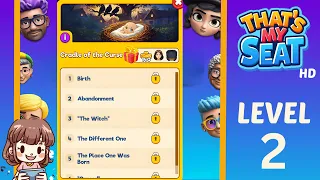


Cradle Of The Curse Level 2 Pattern Overview
The Overall Puzzle Structure
At the start of Level 2 of "Cradle of the Curse," you're presented with a scene involving a group of characters arranged in a specific pattern. The core of this level revolves around determining the correct sequence of actions or choices based on visual cues and the narrative provided. The primary mechanic involves matching or sequencing character portraits to their corresponding actions or story beats, which are presented as text descriptions. This level fundamentally tests your ability to observe details, understand cause-and-effect within the story's context, and apply that logic to a matching or sequencing puzzle.
The Key Elements at a Glance
- Character Portraits: These are the main interactive elements. Each character has a distinct appearance and name (e.g., Bawa, Zoya, Cecily, Korpal, Jain, Pillai, Lad, Haiya, Sinha, Dada, Uriel). Your goal is to correctly assign these characters to their respective narrative moments.
- Footprints: These visual cues indicate a path or sequence. They are scattered across the game board, suggesting movement or progression. The number and placement of these footprints are crucial clues.
- Greek-style Temple: A central structure with pillars serves as a focal point. Characters are often positioned relative to this structure, and their placement may be indicative of their role in the narrative.
- Narrative Text Boxes: These contain the story snippets and descriptions of events. They are the primary source of information for solving the character-action matching puzzle. You need to read these carefully to understand who did what and in what order.
- "That's My Seat" Title and Episode Indicator: This branding clearly identifies the game and the current story chapter ("Cradle of the Curse") and level (Ep 2).
- Boosters and Lives: Standard game elements like boosters (e.g., "x2") and remaining lives (hearts) are visible, indicating the game's progression and available aids.
- Win Streak Gift: A "2x Win Streak Gift" counter suggests a bonus mechanism tied to consecutive successful actions.
Step-by-Step Solution for Cradle Of The Curse Level 2
Opening: The Best First Move
The best initial move in Level 2 of "Cradle of the Curse" is to correctly identify and place Bawa. The game presents multiple characters and narrative options. By carefully reading the first narrative text box, which likely describes the initial situation or a key character's role, you can deduce that Bawa is the starting point. The text mentions Bawa being an old woman villagers believed to be a witch and their plan to leave the baby in her front. This suggests Bawa is the first character to interact with the scenario, making her the logical starting point for sequencing. Placing Bawa correctly simplifies the rest of the level by establishing the first anchor in the sequence.
Mid-Game: How the Puzzle Opens Up
After correctly placing Bawa, the puzzle opens up as you begin to correctly sequence the other characters based on the available narrative clues and their positions. The game progresses by revealing more character interactions and their corresponding story beats. For instance, following Bawa's placement, the next crucial step involves identifying Zoya. The text describing Zoya indicates she was left in front of the old woman's house, still in the bird's nest where she had been found, and that no one from the crowd dared to step beyond a certain point. This suggests Zoya's sequence comes after the initial event involving Bawa.
As you successfully place characters, the game often provides visual feedback, such as ticking off completed actions or moving to the next stage. The footprints become more significant here, as they guide the order. For example, if Zoya is placed after Bawa, you then look for the next logical step, perhaps involving Cecily, who might be described as someone who stood at the edge of the garden or had a specific thought. The game then moves on to characters like Korpal, Jain, Pillai, Lad, Haiya, Sinha, Dada, and Uriel, each with their own textual descriptions that clue you into their sequence within the unfolding narrative. Each correct placement unlocks the next character or option, progressively building the story and solving the puzzle.
End-Game: Final Cleanup and Completion
In the final stages of Level 2, the puzzle typically involves placing the remaining characters, such as Sinha, Dada, and Uriel, into their correct narrative slots. The game might present trickier descriptions or character placements that require careful re-reading of the text to ensure accuracy. For example, Sinha might be described as the leader of the council who came to witness the baby, indicating a later role in the sequence. Dada might be observed from a roof, and Uriel might be watching a raven. The key to finishing the level is to meticulously match each character's description to their visual representation and positional clues on the board.
The "Well Done!" screen signifies the successful completion of the level. This usually follows the correct arrangement of all characters in their story-driven sequence. The level is considered complete when all narrative elements have been correctly linked to their corresponding characters, resolving the "Cradle of the Curse" storyline for this stage.
Why Cradle Of The Curse Level 2 Feels So Tricky
Misinterpreting Footprints and Paths
Players often get tripped up by the footprints. They might assume the footprints are purely sequential, directly indicating the order in which characters need to be placed. However, the footprints can be misleading. For instance, in this level, while some footprints might suggest a direct path, others might represent historical events or background details not directly tied to the immediate character placement. The real trick is to connect the footprints to specific character actions mentioned in the text. For example, if a text describes a character walking a certain path, those specific footprints are the ones to focus on.
The Overlooked "Witch" Clue
A common mistake is overlooking the significance of the "witch" narrative. The initial text describes Bawa as an old woman the villagers believed to be a witch. This is a critical detail. Players might initially dismiss it as flavor text, but it's key to understanding Bawa's role. The confusion often arises because the game presents other characters who also have significant roles. However, the narrative directly links Bawa to the villagers' fear and their decision-making regarding the baby, making her the foundational element for the story's progression. Correctly identifying Bawa based on this description is often the first key to unlocking the rest of the puzzle.
Character Name vs. Role Confusion
Another point of confusion can be differentiating characters based solely on their names versus their described roles. The game presents a variety of characters, and their names might not always immediately hint at their function in the story. For example, characters like "Lad" or "Dada" might seem less significant than a "leader" or a "witch." However, the specific actions or observations attributed to each character in the text boxes are the true identifiers. Players might waste time trying to guess based on names alone, when the narrative descriptions are the definitive clues. It's essential to read each text box and match it to the character portrait that visually corresponds to that action or description.
The Logic Behind This Cradle Of The Curse Level 2 Solution
From the Biggest Clue to the Smallest Detail
The fundamental logic for solving Level 2 of "Cradle of the Curse" is to prioritize the most overarching narrative clues first and then use the smaller details to refine the sequence. The biggest clue is usually the initial setup of the story, identifying the primary characters and the central conflict. In this case, it's the baby, the village's decision, and the role of the supposed "witch." Once you establish the start of the sequence with Bawa, you then look for the next most critical event or character interaction described. This often involves characters who directly react to or are involved in the initial situation. Subsequent steps involve piecing together the smaller narrative threads and character actions, using the footprints and their relative positions as secondary confirmation. It’s a process of building the narrative chain, starting with the most prominent links and filling in the gaps with supporting details.
The Reusable Rule for Similar Levels
The reusable rule for similar levels in "That's My Seat" is to always start by identifying the character or action that initiates the narrative event. Look for the first domino in the sequence. This is often conveyed through descriptions of actions, decisions, or initial states. Once that starting point is secured, use the supporting text and visual clues (like footprints or character positions relative to objects) to place the characters that logically follow. If you encounter multiple characters with similar descriptions, carefully re-read the text for subtle differences that indicate their precise order. This approach of establishing a clear beginning and then building sequentially, using all available information, is a consistent pattern across many story-based puzzle levels.
FAQ
What is the first step to solve Level 2 of Cradle of the Curse?
The first step is to identify the character most central to the initial narrative event, which in this level is typically Bawa, described as the supposed witch involved in the baby's fate.
How do footprints help in Level 2 of Cradle of the Curse?
Footprints can indicate the order of events or paths taken by characters. They serve as visual guides to confirm the sequence derived from the narrative text.
What is the main challenge in Level 2 of Cradle of the Curse?
The main challenge is correctly sequencing the characters by matching their descriptions in the text to their actions and positions on the board, often requiring careful reading to avoid misinterpreting clues like footprints or character roles.