





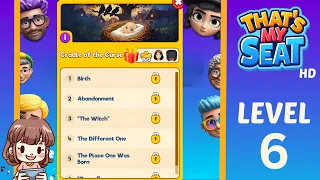
Cradle Of The Curse Level 1 Pattern Overview
The Overall Puzzle Structure
At the start of "Cradle Of The Curse" Level 1, you're presented with a somewhat chaotic arrangement of objects and characters, all centered around a baby in a nest. The primary goal is to correctly identify and place characters based on their descriptions and visual cues, essentially matching them to their roles or relationships in the unfolding story. The game tests your observation skills and ability to connect seemingly disparate pieces of information. It’s not just about matching identical items; it's about understanding the context and narrative clues.
The Key Elements at a Glance
- The Baby: The central figure, around which all other elements revolve. The baby's condition and appearance are key to understanding the events unfolding.
- Footprints: These scattered dashed outlines represent where characters are or should be placed. They are the primary indicators for placement.
- Characters: Each character has a portrait and a name, and they need to be moved to the correct footprint based on the story text. The initial characters are Dada, Korpal, Zoya, Cecilia, and Sona. Later, others like Vivek, Tella, Snowy, Nitya, Prem, Saral, Lad, Kalla, and Jain appear.
- Story Text: This is crucial. Each section of text provides a clue about a character's actions or location, directly guiding where they should be placed.
- Ravens: These dark birds appear in the background and sometimes interact with the scene, hinting at the 'cursed' aspect of the story.
- The Pit: The central area where the baby is located, surrounded by the footprints.
Step-by-Step Solution for Cradle Of The Curse Level 1
Opening: The Best First Move
The most effective opening move is to start with the baby. The text clearly states, "My name is Zoya, I was born here." and shows Zoya's portrait. This immediately links Zoya to the baby's location. Dragging Zoya's portrait to the baby's footprint is the logical first step. This action not only places Zoya correctly but also highlights the area around the baby, often revealing more clues or interactions.
Mid-Game: How the Puzzle Opens Up
After placing Zoya, the puzzle starts to reveal more connections. For instance, the text might mention someone standing near the baby or observing the scene. You'll see characters like Cecilia and Hamlin appear, with the text indicating Cecilia "tried to understand what the crowd gathering in front of her was so furious about." You'd then drag Cecilia to a footprint closer to the edge of the main action. The game progresses by systematically matching characters to their described positions, using the footprints as guides. For example, if the text says "Saral was listening to the crowd," you'd look for Saral's portrait and place them on an available footprint where they can observe. The visual cues of characters interacting (like the dogs with Hamlin) also reinforce these placements.
End-Game: Final Cleanup and Completion
As you progress through the story snippets and place more characters, the final stages often involve filling in the remaining footprints based on the last few descriptions. For example, the text might describe someone observing from a rooftop or standing in a specific spot. The final characters, like Prem, Kalla, and Lad, need to be placed according to their narrative roles. The game culminates when all characters are correctly positioned according to the story's progression. The "Well Done!" screen confirms successful completion of the level's puzzle.
Why Cradle Of The Curse Level 1 Feels So Tricky
Misreading Character Descriptions
Players often misread or overlook specific details in the text that differentiate characters. For example, two characters might be described as "standing," but one might be "standing near the pit" while another is "standing on the roof." The visual of the footprints is critical here – some are on the ground, and others are in elevated positions suggesting rooftops. Misplacing a character based on a general description rather than the specific location detail leads to a dead end or an inability to complete the puzzle.
The "Crowd" Illusion
The visual of many people around the central pit can be misleading. Players might think any free footprint is a valid place for any character not yet placed. However, the text always provides specific clues. For instance, characters like "Rout" might be described as "standing next to a man wearing a red hat." Finding that man (Oza) and then placing Rout next to his designated footprint is the correct approach, rather than just placing Rout on any random footprint. The trick is to create relationships between characters based on the narrative, not just fill empty spaces.
Overlooking Animal Interactions
The game sometimes uses animal companions or interactions as secondary clues. For example, a dog might be associated with a particular person. If the text mentions "Hamlin petting a stray dog," and Hamlin is already placed, you should look for where the dog might be. If a dog portrait appears later, you might need to place it near Hamlin. Similarly, the ravens in the background, while atmospheric, can sometimes hint at the presence of specific characters or events related to them. Missing these subtle visual connections can make it harder to deduce the correct placement for certain characters.
The Overlap of Footprints
In some instances, footprints might appear close together or in less distinct areas, making it hard to determine precise placement. The key here is to rely heavily on the text. If two characters are described as being next to each other, their footprints should align accordingly. The game often reveals a character's position by describing their relationship to another already-placed character. For example, if Sona is placed, and the text says "On her other side stood a man holding a fish," you'd look for a man with a fish in his hand and place him adjacent to Sona's footprint.
The Logic Behind This Cradle Of The Curse Level 1 Solution
From the Biggest Clue to the Smallest Detail
The core logic for solving this level, and many like it, is to start with the most concrete and easily identifiable clues and then work towards the more ambiguous ones. The baby and its immediate surroundings are the anchor. Identifying characters directly linked to the baby (like Zoya) or to the general scene of the pit is the first step. Once these initial characters are placed, their positions and the accompanying text provide context for placing the next set of characters. For instance, if Zoya is placed, and the text mentions someone observing her, you look for that observer and place them on a footprint that makes sense visually (e.g., near the edge of the pit or on a higher vantage point). It’s a process of deduction, using each correctly placed character to unlock the placement of others.
The Reusable Rule for Similar Levels
The solving pattern here is consistent: identify the central element or the most clearly described character/object, place it, and then use the text to deduce the relationships and relative positions of other elements. Always look for the most direct clues first. If a character's action or location is explicitly stated, prioritize that. Then, use relational clues ("next to," "behind," "watching," "on the roof of") to place the remaining elements. The footprints are not just markers; they represent the relational map of the scene. Pay close attention to the text and the visual representation of the footprints to build a complete picture.
FAQ
How do I know where to place the characters in Cradle Of The Curse Level 1?
You need to read the text provided for each character carefully. The text describes their actions or locations relative to the central scene and other characters. Match these descriptions to the available footprints on the board.
What happens if I place a character incorrectly?
If you place a character on the wrong footprint, the puzzle won't progress, or you might get a hint that something is incorrect. You can usually drag the character to a different footprint to try again. Incorrect placements prevent you from completing the level until corrected.
Are the animals important in this puzzle?
Yes, animals like the dogs and cats can be important visual clues. Sometimes they are linked to specific characters in the story text, helping you confirm a character's position or identify them. Pay attention to any interactions described between characters and animals.