
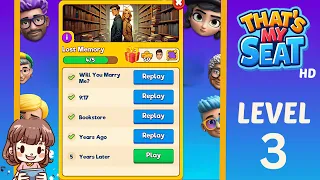
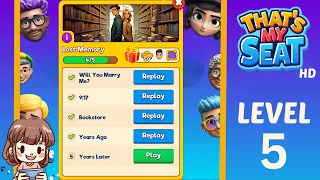
Lost Memory Level 3 Pattern Overview
The Overall Puzzle Structure
At the start of Level 3 in the "Lost Memory" chapter, you're presented with a scene that feels familiar yet has new elements. The core of the puzzle involves strategically placing characters in specific seats around tables in a library. The layout is a top-down view of a library with several tables, each with a set number of chairs. There are also bookshelves lining the walls, indicating a reading or studying environment. The main mechanic is identifying which characters belong together or in certain spots based on conversational clues and visual cues. This level fundamentally tests your ability to decipher context clues from dialogue and match them to character placements, essentially a visual deduction puzzle with a narrative overlay.
The Key Elements at a Glance
- Characters: Each character is represented by a portrait and a name. The objective is to seat them correctly.
- Tables and Chairs: These are the primary locations where characters need to be placed. Each table has a specific number of chairs, and some tables have unique features like newspapers or books.
- Dialogue Boxes: These contain narrative snippets and clues that are crucial for determining character placement. The dialogue often hints at relationships, past encounters, or specific preferences of the characters.
- Footprints: These are visual indicators on the floor, signifying specific spots or pathways that characters might be associated with. They can be a direct hint about where a character should be or what they were doing.
- Bookshelves: While primarily environmental, the presence of specific books or the arrangement of shelves can sometimes offer subtle contextual clues.
Step-by-Step Solution for Lost Memory Level 3
Opening: The Best First Move
The best opening move is to correctly place Julian. The dialogue from Julian gives a strong hint about his intentions: "Who was this woman calling herself Clara?". This immediately suggests a connection between Julian and Clara. Looking at the scene, Julian is positioned near a set of chairs, and the visual cue of hearts appearing above his head when he is placed near Clara confirms this connection. Placing Julian first near Clara, and observing the visual feedback, helps establish an initial correct pairing and simplifies the subsequent deductions.
Mid-Game: How the Puzzle Opens Up
After correctly seating Julian and Clara, the puzzle begins to unravel. The next significant placement is Rue. The clue "Since Rue discovered this, she can't put comic books down" is key. You see Rue near a table with comic books. Placing her there makes sense. The visual feedback will confirm this. As you correctly place characters, their initial positions or their interactions with the environment become more apparent. For instance, you'll notice Chiren near a bookshelf, which aligns with the clue about her browsing books. Etta is seen near a table with newspapers, and the dialogue about her sister who loves comic books indirectly links her to Rue's environment, or at least to a shared interest in reading materials.
Following these connections, we can deduce the placements for other characters. Michael is shown near a table with a newspaper, fitting the clue about him not hearing his mother. Santino is also near a table with newspapers, which aligns with him reading the day's newspapers. Brooke is observed standing, looking for something, and the clue about her hoping to find a book leads to placing her near the shelves. Ashley is also near the shelves, having found a book. Mara is meticulously arranging books on the shelves, directly linking her to that area.
End-Game: Final Cleanup and Completion
As the characters fill the seats, you'll notice the remaining spots and characters. The final stages involve confirming the placements of characters like Morana, who seems to be reflecting on trust and past stories, and Petula, who is reading a book. The footprints on the floor can be particularly helpful for the final placements, acting as direct indicators of where certain characters should be. For example, if you see a character's portrait near a footprint and the dialogue mentions them being in a specific spot, matching these visual cues will lead to the correct seating arrangement. The puzzle is completed when all characters are placed in their respective seats according to the narrative clues and environmental hints.
Why Lost Memory Level 3 Feels So Tricky
The Misleading Red Herrings of Books
Players might be tempted to place every character near a bookshelf simply because it's a library. However, the visual detail of specific characters interacting with different items—like newspapers or comic books—is the crucial differentiator. The trick is realizing that while books are everywhere, some characters have more specific interests or actions related to other items on the tables. Focusing on these specific interactions, rather than the general environment, is key. For example, Etta's dialogue mentions comic books, and Rue is also associated with them, making their proximity to a comic book pile more significant than just being near any shelf.
The Subtle Footprint Clues
The footprints on the floor can be easily overlooked or misinterpreted. Players might see them as decorative elements rather than functional hints. The solution lies in observing that these footprints often appear in specific seating areas or pathways, and a character's dialogue might indirectly reference their movement or location, like "Santino was sitting across from Morana." The visual of a footprint in that exact spot, coupled with the dialogue, solidifies the placement. The mistake is treating footprints as mere decoration and not as spatial indicators for character positioning.
The Interwoven Dialogue Threads
The dialogue in this level is dense and can sometimes seem like it's leading you in circles. Players might focus too much on one character's dialogue and miss a crucial connection to another. The key to solving this is to actively cross-reference the dialogue. For instance, if Julian mentions looking for Clara, and Clara's dialogue hints at a shared past, then observing their initial proximity or any visual cues (like hearts) that appear when they are near each other is vital. The trap is to solve it linearly without looking for these interdependencies between characters' statements.
The Logic Behind This Lost Memory Level 3 Solution
From the Biggest Clue to the Smallest Detail
The fundamental logic for solving "Lost Memory" Level 3, and similar levels in this game, is a process of deduction driven by observation and cross-referencing. You start with the most direct clues: character names and their immediate environment or actions. For example, Julian's mention of Clara and the visual heart cues are a strong starting point. Then, you layer in more specific clues from the dialogue boxes. For instance, if a character is described as reading a particular item (like comic books or a newspaper), you look for that item in the scene and try to place the character nearby. The footprints and subtle environmental details serve as the smallest, but often confirmatory, details. The overall strategy is to use the broadest clues to narrow down possibilities and then use the finer details to lock in the correct placements. It's about building a web of connections, starting with the most obvious threads and then weaving in the more intricate ones.
The Reusable Rule for Similar Levels
The reusable rule for solving levels like this in "That's My Seat" is to prioritize direct observational evidence and narrative consistency.
- Identify Direct Visuals: Look for characters interacting with specific objects (books, newspapers, comic books), or the presence of visual indicators like footprints or emotional cues (hearts).
- Connect Dialogue to Visuals: Match character dialogue to these visual elements. If a character mentions an interest or action, find that in the scene and place them there.
- Cross-Reference Clues: Don't solve for characters in isolation. See how one character's dialogue or placement affects or is affected by another's. Look for relationships, shared locations, or opposing statements.
- Use Contextual Clues as Confirmation: Footprints, table arrangements, and environmental details are often the final pieces of the puzzle that confirm your deductions.
This method of starting broad and narrowing down, while constantly checking for narrative and visual consistency, is effective for all "That's My Seat" puzzles that rely on narrative deduction and scene interaction.
FAQ
How do I know where to place Julian in Level 3?
Julian's dialogue explicitly asks about "this woman calling herself Clara," and placing him near Clara in the scene with heart emojis confirms their connection.
What is the significance of the footprints in this level?
The footprints indicate specific spots or pathways associated with characters. They often confirm dialogue clues, like indicating where a character was sitting or standing.
Why is it tricky to place the characters based on the dialogue?
The dialogue provides narrative context, but the visual elements like specific items on tables (comic books, newspapers) and footprints are crucial for precise placement. Players might get lost in the story without noticing these key visual clues.