

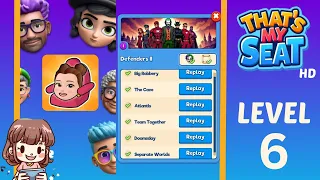
Defenders 2 Level 2 Pattern Overview
The Overall Puzzle Structure
At the start of this level, you see a circular room with several occupied chairs and a central area that needs to be cleared. The characters are seated around a large, dark, circular object in the middle of the room. The goal is to clear the occupied seats, presumably to make way for characters or to resolve a narrative objective. The primary mechanic involves interacting with the characters and their surroundings to achieve this. The level seems to test your ability to observe character placement and the surrounding environment to make efficient moves.
The Key Elements at a Glance
- Characters: Various characters are seated in chairs around the central area. Some are already in place, while others seem to be waiting to be seated or moved.
- Chairs: The chairs are the main interactive elements. Each occupied chair is a puzzle element that needs to be addressed.
- Central Area: This is the focal point of the room. Clearing the chairs likely relates to clearing this central space.
- Character Descriptions: A text box provides descriptions of the characters, offering clues about their roles and relationships. This is crucial for understanding the narrative context and potentially identifying which characters are essential or need to be moved first.
- Item Icons: In the lower part of the screen, there are icons for different items, such as hearts (lives) and what appear to be puzzle-solving tools or power-ups (e.g., a lightning bolt, a purple gem). These are likely used to overcome obstacles or speed up the process.
Step-by-Step Solution for Defenders 2 Level 2
Opening: The Best First Move
The most effective opening move is to identify the characters who are directly blocking the path or the central objective. In this scenario, the character "Alfred" is seated in a chair that appears to be obstructing the main path. Moving Alfred to an available seat frees up his current chair and progresses the objective. This is a good starting move because it directly clears an obstruction and potentially makes more seating available.
Mid-Game: How the Puzzle Opens Up
After moving Alfred, the next logical step involves addressing other characters who are either out of place or occupying key seats. Observing the character descriptions can provide hints. For instance, if a character is described as "loyal" or a "rival," their seating arrangement might be significant. The gameplay demonstrates moving other characters like "Barbara" and "Selina" to appropriate seats, continuing to clear the occupied chairs. This phase is about systematically placing characters according to the clues provided, opening up more of the room and potentially revealing new objectives or interactions. Each successful move creates space and allows for better strategic placement of the remaining characters.
End-Game: Final Cleanup and Completion
As you progress, the focus shifts to placing the remaining characters and resolving any final obstructions. The description of "B-Man" as the leader is a key clue. Ensuring B-Man is in a prominent or appropriate seat often signifies the final stages of the level. The gameplay shows the player carefully moving characters like "Dicky" and "Robin" into their designated spots. The use of special items might become necessary here if specific chairs are harder to clear or if there are time constraints. The level concludes once all characters are appropriately seated, leading to a "Well Done!" screen and the completion of the story segment.
Why Defenders 2 Level 2 Feels So Tricky
The Misleading Character Descriptions
Players might initially overlook the character descriptions, focusing solely on the visual arrangement. However, these descriptions are vital for understanding the puzzle's logic. For example, "Alf is the symbol of loyalty. B-Man would have never made it this far without him. Now, he's bringing his master his evening tea." This text implies a specific relationship and action for Alf, suggesting he should be near B-Man or in a specific type of seat. Misinterpreting or ignoring these narrative clues can lead to inefficient character placements and wasted moves.
The Strategic Importance of Seating Order
The puzzle isn't just about filling chairs; it's about filling them correctly. The trick lies in recognizing that each character has a specific role or connection that dictates their ideal seating position. For example, if "Barbara is a hero who was paralyzed after being shot by the leader of the villains. She plays a crucial role in managing information flow and organization," it suggests she might need a seat with access to information, perhaps near a control panel or a strategic vantage point. Players might try to simply fill any empty chair, which would be a mistake. The visual detail to focus on is the narrative hint associated with each character's portrait at the bottom of the screen.
Overlooking the Central Objective
While the chairs are the most obvious interactive elements, the ultimate goal is often related to the central area or a broader narrative objective within the story. In this level, the characters are gathered in a room that looks like a command center or meeting place. The placement of characters likely serves a purpose beyond simply filling seats – perhaps it's to initiate a plan, gather intelligence, or prepare for a mission. Players might get so caught up in the mechanics of moving characters that they forget the underlying reason for doing so. The key visual clue is the context provided by the "Defenders 2" chapter itself, which implies a mission-based scenario.
The Logic Behind This Defenders 2 Level 2 Solution
From the Biggest Clue to the Smallest Detail
The solving logic for this level begins with understanding the overall context: "Defenders 2" implies a team-based mission. The biggest clue is the character descriptions themselves, which offer narrative context and hints about relationships and roles. For instance, identifying "B-Man" as the leader is a critical piece of information. From there, one must deduce the intended seating arrangement based on these descriptions, prioritizing characters with leadership roles or specific narrative functions. The smallest details are the individual character portraits and their descriptions, which must be matched correctly to their assigned seating to ensure the puzzle resolves as intended. It’s about piecing together the story and using it to inform your strategy.
The Reusable Rule for Similar Levels
The reusable rule for levels like this in "That's My Seat" is to always pay close attention to the narrative elements provided alongside the puzzle mechanics. Character descriptions, dialogue snippets, or story context are rarely just flavor text; they often contain the core logic for solving the puzzle. Look for key roles (leader, ally, enemy, specialist), relationships (loyalty, rivalry), and implied actions or needs (preparing tea, managing information). These clues dictate the correct placement or interaction, turning a potentially frustrating tile-matching or placement puzzle into a solvable logic problem. Always start by reading the story elements, then apply them to the visual layout.
FAQ
How do I know where to place each character in Defenders 2 Level 2?
The character descriptions at the bottom of the screen provide crucial clues about each hero's role, relationships, and potential actions, which directly inform their correct seating position.
What is the main goal of Defenders 2 Level 2?
The main goal is to correctly seat all the characters according to their narrative roles and relationships, likely to facilitate a story event or mission objective within the "Defenders 2" chapter.
Are there any special items I need to use in this level?
While not always explicitly necessary, the available items like hearts (lives) and potential power-ups can be used to speed up the process or overcome challenging placements if you get stuck.